Review: Practicing Self-love Everyday Mobile App Embroidery
As a designer who spends half my life staring at screens and the other half troubleshooting thread tension, I approach every new embroidery file with a healthy dose of skepticism. We are constantly bombarded with digital assets that look stunning in a preview but fall apart under the needle. Today, I am evaluating the Practicing Self-love Everyday Mobile App, a set of onboarding screen graphics originally designed for UI/UX contexts. My goal is to determine if these linear concepts translate effectively into physical form, specifically for custom apparel, personalized gifts, and small business merchandise.
First Impressions: From Pixel to Stitch
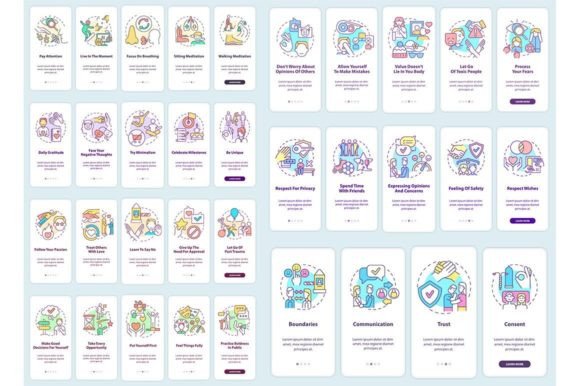
The source material for this design is rooted in modern interface aesthetics. It features clean lines, structured layouts, and typography using Myriad Pro-Bold and Regular fonts. When you first look at the Practicing Self-love Everyday Mobile App graphic template, the mood is undeniably calm, organized, and intentional. The "linear concepts" mentioned in the description suggest a minimalist approach, which is a double-edged sword in machine embroidery.
In the world of machine embroidery design, simplicity often wins because it reduces the risk of puckering and thread breaks. However, minimalism can also result in a product that feels sparse if not executed with high-quality thread choices. The visual personality here is professional yet warm. It does not scream for attention; instead, it whispers a sense of routine and mindfulness. This makes it an excellent candidate for brands that value clarity and mental wellness, such as yoga studios, therapy practices, or boutique lifestyle shops.
Real-World Application: The Tote Bag Scenario
To truly judge a design’s viability, we have to imagine it on a finished product. Let’s say I am preparing a batch of custom embroidered tote bags for an upcoming craft fair. These bags are targeted at women who appreciate journaling, self-care routines, and aesthetic organization. The Practicing Self-love Everyday Mobile App design, with its step-by-step walkthrough graphic instructions, translates beautifully onto canvas or cotton duck cloth.
Imagine the front panel of the tote featuring a simplified version of one of the onboarding screens. Perhaps it highlights a single key phrase from the UI layout, stitched in a crisp satin stitch or a dense fill stitch depending on the available space. The linear nature of the original graphic allows me to isolate specific elements—like a progress bar or a checklist icon—and embroider them as standalone accents. This transforms a digital concept into a tangible reminder for the user. For an Etsy seller, this adds immense value because the product tells a story. It isn’t just a bag; it’s a tool for practicing self-love everyday, encoded in thread.
Beyond Totes: Apparel and Home Decor
While tote bags are a strong fit, this design has versatility across other categories. Consider a sweatshirt embroidery project for a cozy autumn collection. Placing a subtle, linear graphic on the back yoke or sleeve cuff creates a sophisticated look that appeals to the handmade product market without being overly loud. Similarly, for apron embroidery, this design could serve as a charming accent near the pocket area, reinforcing the idea of mindful cooking or kitchen rituals.
In the realm of home decor, pillow covers offer a large, flat surface where the details of the Practicing Self-love Everyday Mobile App can shine. The clean geometry of the original UI design pairs well with linen or soft cotton blends, creating a nursery decor item or a living room accent that feels curated rather than mass-produced. For holiday embroidery, these designs can be adapted into gift tags or small patch applications on stockings, offering a modern twist on traditional gifting.
Technical Considerations and Potential Pitfalls
Not every digital asset survives the transition to fabric intact. There are specific areas where the Practicing Self-love Everyday Mobile App requires careful handling. Because the original design relies on fine lines and potentially small text elements, stitch density becomes a critical factor. If the design is too intricate for the chosen hoop size, you may lose the definition that gives the piece its character.
I strongly advise testing the design on scrap fabric before committing to your final garment. Pay close attention to how the stabilizer interacts with the base fabric. Textured fabrics, such as heavy denim or bouclé wool, can obscure the fine details of a linear design. In these cases, you might need to simplify the graphic or use a heavier weight thread to ensure visibility. Conversely, thin or stretchy fabrics require additional support to prevent distortion, especially if the design includes large areas of fill stitch.
Another crucial consideration is color contrast. The original UI likely uses dark text on a light background (or vice versa). When selecting thread colors, ensure there is enough difference between the thread and the fabric to maintain legibility. A common mistake is choosing threads that are too similar in tone, resulting in a finished product that looks muddy or unclear. Inspect the design in black and white mockups to verify that the shapes hold up without the aid of color.
Where to Use With Caution
- Small Hoop Sizes: If the design contains tiny lettering or intricate corner details, a small hoop may force you to scale down too much, losing detail entirely.
- Curved Surfaces: Applying this design to caps or hats requires careful digitizing to account for curvature. Linear elements may warp if not properly adjusted for the dome shape.
- Dense Stitch Areas: Avoid placing large blocks of fill stitch next to delicate running stitches unless the fabric can handle the tension.
- Frequent Washing: For items like baby clothes or kitchen towels, ensure the design is robust enough to withstand repeated laundering without fraying or pilling.
Impact on Brand and Customer Trust
For commercial embroidery projects, the quality of the design directly impacts customer trust. A poorly executed digital graphic can make a brand look amateurish. However, when the Practicing Self-love Everyday Mobile App is translated into a clean, well-stitched embroidered patch or logo, it signals professionalism. Buyers associate precise stitching with attention to detail, which increases the perceived value of the small shop product.
This design also enhances brand consistency. If your business focuses on wellness, organization, or modern living, using a design that mirrors those values in its visual language reinforces your message. The clean, uncluttered aesthetic aligns with current trends in design assets that favor functionality and beauty in equal measure. It invites engagement because it feels relevant to the buyer’s daily life.
Final Verdict and Practical Notes
The Practicing Self-love Everyday Mobile App is a versatile graphic template that offers significant potential for creative entrepreneurs. Its strength lies in its clarity and modern appeal, making it suitable for a wide range of embroidery projects from personal gifts to commercial merchandise. However, success depends on proper preparation and technical execution.
- Test First: Always run a test stitch-out on scrap fabric to check for tension issues and detail loss.
- Check Licensing: Confirm whether the digital embroidery file allows for commercial use before selling finished items.
- Optimize Details: Simplify overly complex elements if necessary to ensure they stitch out clearly.
- Choose Wisely: Select fabrics and stabilizers that complement the linear nature of the design.
By treating this design with the respect it deserves and applying practical embroidery techniques, you can create a finished product that resonates with customers and stands out in a crowded marketplace. Whether you are an Etsy seller looking to expand your catalog or a hobbyist crafting a meaningful gift, this design offers a solid foundation for creating something beautiful and functional.